





Search
Hazardous Area Classification: 6 Common Questions
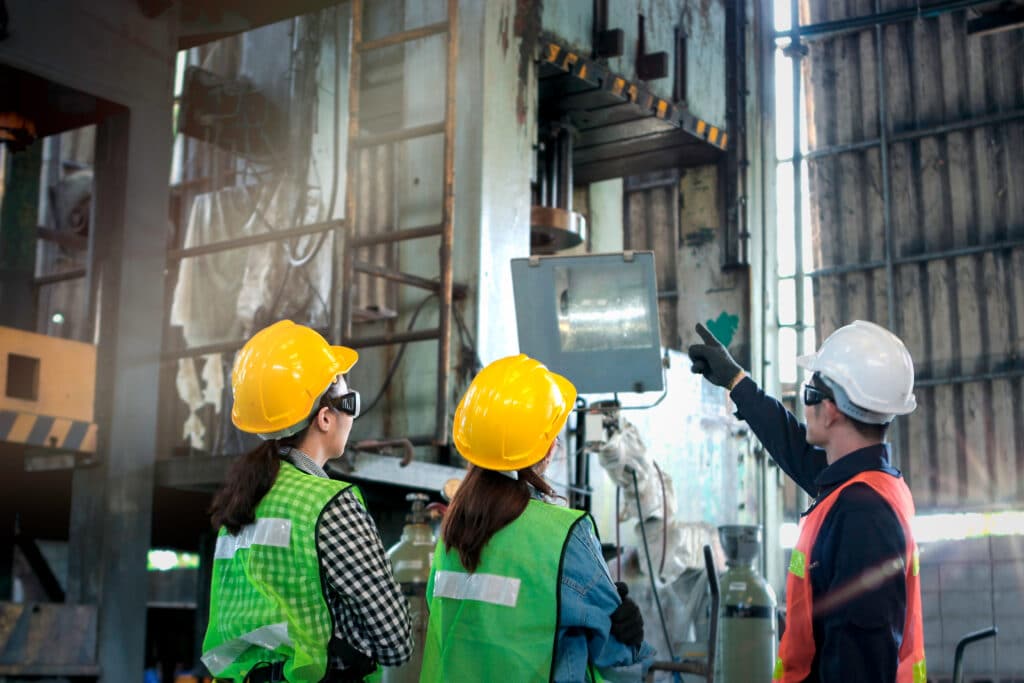
If you’ve never gone through a Hazardous Area Classification (HAC) before, the questions tend to be less about codes and more about why HAC matters and what it actually means for your facility.
Below are six of the most common (and important) questions we hear, along with straightforward answers grounded in how hazardous locations really work.
We’ve never had an incident, so why do we need Hazardous Area Classification?
Electrical equipment has the potential to cause fire, flash fire, and explosion. Electrical arcs and sparks can not only be generated from faulty cables or other components but, more importantly, from many electrical equipment during normal operation. Additionally, outer surfaces of some electrical equipment such as motors can get hot during normal operation. These sparks and hot surfaces can trigger runaway fires and readily ignite explosive atmospheres.
Facilities that process or handle flammable gases, liquids, powders, or fibers/flyings face inherent fire and explosion risks, and the potential for a fire, flash fire, or explosion can increase significantly due to electrical arcing or high surface temperatures.
A hazardous area is defined as an area in which the atmosphere contains, or may contain in sufficient quantities, flammable or explosive gases, vapors, dusts, or fibers/flyings.
Hazardous area classification exists to ensure that electrical ignition sources are controlled in areas where those atmospheres exist during normal or abnormal operating conditions.
What is hazardous area classification actually doing?
Hazardous area classification is meant to systematically identify if and where flammable atmospheres can occur in your facility.
In practice, this means:
- Establishing the location, likelihood, extent, and duration of flammable atmospheres;
- Understanding the flammability/combustibility characteristics of hazardous materials (flammable / combustible / ignitable gas, vapor, dust, or fibers/flyings) present in the area;
- Determining the nature of the hazardous environment (gas/vapor, dust, or fibers); and
- Defining hazardous areas based on the probability that a flammable or combustible mixture could be present.
The result is a classification that can then be used to select, install, and maintain electrical equipment that is specifically designed to be suitable for use in the type of hazardous areas identified.
Effectively, hazardous area classification is a tool that enables engineers to specify and install electrical equipment so it doesn’t become an ignition source.
Is hazardous area classification just an electrical requirement?
Yes and No. In the US, hazardous area classification is (strictly speaking) for the selection and installation of appropriately rated electrical equipment. In Europe and much of the rest of the world (see Table 1 for Class/Division and Zone Classifications), hazardous area classification is performed to control competent electrical and non-electrical ignition sources, such as static electricity discharges, mechanical impact and frictional sparks, and hot surfaces. This stands to reason because electrical arcs and sparks are often not the only sources of ignition in a processing area!
Flammable vapor atmospheres will be very susceptible to certain ignition sources such as low-energy static electricity discharges.
Combustible dust accumulations on sufficiently hot surfaces can catch fire and dispersed dust clouds in air can cause flash fires and explosions when exposed to an energetic ignition source.
Improved housekeeping and control of flammable atmospheres reduce the chance that ignition can occur due to hot surfaces, electrical arcs and sparks, electrostatic discharges, mechanical sparks, etc.
Table 1. Hazardous Areas and Relationship between Divisions and Zones
| NFPA 70/NEC – North America | IEC /ATEX – Europe and some other countries | ||
| Class – Division | Zones | ||
| CLASS I – GAS/VAPOR CLASS II – DUST CLASS III – FIBERS or FLYINGS (No Group Designation) | Division 1: Explosive atmosphere is present or likely to be present in normal operations | Zone 0 (Gas) Zone 20 (Dust) | An area in which an explosive atmosphere is continually present or present for long periods or frequently [>1,000 hours/year] |
| Zone 1 (Gas) Zone 21 (Dust) | An area in which an explosive atmosphere is likely to occur in normal operation [>10 hours/year and <1,000 hours/year] | ||
| Division 2: Explosive atmosphere is not present in normal operation, but could be present in abnormal operations | Zone 2 (Gas) Zone 22 (Dust) | An area in which an explosive atmosphere is not likely to occur in normal operations and, if it does occur, will exist for only a short time [<10 hours per year] | |
What’s the difference between Division 1 and Division 2 Classified Areas?
The Division defines the probability of hazardous material being able to produce an explosive or ignitable mixture.
- Division 1 indicates the hazardous material has a high probability of being present, either continuously or intermittently under normal operating conditions.
- Division 2 indicates the hazardous material has a low probability of being present and is typically only present during abnormal conditions for a short period.
Equipment and wiring requirements in Division 1 areas are significantly more severe and restrictive than those for Division 2.
The decision to classify a location as a Division 1 or Division 2 hazardous area should be based on the probability or likelihood that a flammable/combustible mixture could be present. This probability determines how strict equipment requirements need to be.
Can we reduce our classified areas, or are we stuck with them?
Yes, you can! And for the most part, it’s usually worth challenging the extent of your Hazardous Areas.
Reduced classified areas mean improved control of flammable atmospheres, and reclassification from Div 1 to Div 2 means less onerous (and costly) requirements for cables, conduits, enclosures, motors, and other electrical equipment.
It’s reasonable for a facility to ask “what can we do and how can we change our process/ practices so the extent of Division 1 areas could be reduced? Similarly, “could Division 2 areas be reduced in size, and in some cases be re-classified as non-hazardous?”
Codes, standards, and industry best practices provide many ideas on how to accomplish this, including:
- Improved containment
- Improved ventilation
- Avoiding open-air transfer
- Maintaining equipment under negative pressure
- Improved housekeeping
- Using combustible gas detection systems
What information do you need to perform HAC properly?
Accurate classification depends on understanding the type, quantity, and frequency of flammable or combustible materials used, along with drawings and process details that describe how those materials are handled.
It also requires evaluating the following:
- Powders: Properties such as Minimum Explosible Concentration (MEC), Minimum Ignition Energy (MIE), Layer Ignition Temperature (LIT), Minimum Auto-Ignition Temperature (MAIT-cloud), and Volume Resistivity
- Liquids: Properties such as flashpoint (FP), auto-ignition temperature (AIT), and flammable limits (LFL & UFL)
- How materials are handled and where releases may occur
When performing HAC, it’s important that facility personnel are involved in all steps of the process, so their historical and institutional knowledge is utilized by the expert.
Final Thoughts
Hazardous area classification is about identifying where fire or explosion hazards may exist due to the presence or occurrence of flammable gases, vapors, liquids, combustible dust, or ignitable fibers and flyings.
It is used to assign a Class and Division around each release point and ensure the correct choice of electrical equipment and installation.
Having an up-to-date hazardous area classification always makes an excellent starting point for wider hazard studies, so don’t ignore it.
Need Support with Hazardous Area Classification?
At Stonehouse, we classify hazardous areas by establishing the likelihood, extent, and duration of flammable atmospheres, and advise on how those atmospheres can be eliminated and/or controlled.
We also advise on the selection and installation of electrical equipment suitable for use in classified hazardous areas and audit facilities to check equipment suitability.
Get in touch to learn more about our hazardous area classification services, training, and fire and explosion hazard assessment support.
If you’ve never gone through a Hazardous Area Classification (HAC) before, the questions tend to be less about codes and more about why HAC matters and what it actually means for your facility.We’re answering six of the most common (and important) questions we hear.

Get in touch
To learn more about our expertise and services in dust explosion prevention & mitigation, call us at +1 609 455 0001 or email us at [email protected] today.
We also offer tailored virtual and in-company process safety training programs on Dust Explosions, Static Electricity and HAC (Hazardous Area Classification) and more. Find further information here.