





Search
NFPA 660 Compliance and Beyond: Expert Insights on Combustible Dust Hazards

Combustible dust hazards continue to present risks across a wide range of industries, yet many facilities still struggle to navigate the requirements and translate them into action. Understanding the ins and outs of NFPA 660 – and the expectations around Dust Hazard Analysis (DHA), testing, and training – is critical.
In this Stonehouse Q&A, Vahid Ebadat, PhD, our President, shares some insights on NFPA 660, common gaps we see in the industry, and how organizations can take a more data-driven approach to managing their combustible dust hazards.
Q: NFPA 660 consolidates several combustible dust standards into a single document. What are the most important changes organizations should understand, and how should facilities begin preparing for compliance?
Vahid: At a fundamental or basic level, NFPA 660 doesn’t introduce any major new requirements compared to NFPA 652. The biggest change is consolidation; NFPA 660 brings together NFPA 652 and commodity- and industry-specific NFPA dust standards into a single, comprehensive document.
The new NFPA 660 is organized into core requirements and commodity-specific chapters. Instead of navigating multiple standards, you can now find everything in one document. NFPA 660 is more user friendly and provides more consistent technical guidance across all sectors.
NFPA 660 also requires that the DHA must be performed or led by a qualified person with documented experience and education in DHA methodologies and the assessment and identification of mitigation or elimination options for the fire, flash fire, explosion, and related hazards of the specific type or types of combustible dusts involved in the facility.
That said, just like with NFPA 652, the owner/operator of a facility with potentially combustible dust must still:
- Determine the combustibility and explosibility hazards of materials
- Identify and assess fire, flash fire, and explosion hazards
- Manage the identified fire, flash fire, and explosion hazards
- Communicate the hazards to affected personnel
Q: Many facilities completed a Dust Hazard Analysis to meet the original NFPA deadlines. What common compliance gaps or misunderstandings do you still see in DHAs, and what should companies be doing to ensure their analysis remains useful and actionable?
Vahid: NFPA 652 came into effect in 2015 and gave organizations five years to comply with its requirements, including completing a Dust Hazard Analysis (DHA) and addressing identified fire, flash fire, and explosion hazards. It also required DHAs to be reviewed and updated at least every five years – usually referred to as a DHA revalidation.
Based on this timeline, facilities handling combustible dust should have not only performed their initial DHA but also completed their first five-year DHA review by now.
In our experience, many organizations have done just that, completing DHAs and DHA revalidations, implementing all the necessary prevention and mitigation measures, and training operators on the hazards of dust fire and explosion hazards. In a few cases, the initial DHA is yet to be done. In other cases, an initial DHA has been completed, but there has been limited action on the safety recommendations outlined in the DHA report.
Performing a DHA does not equate to compliance with the requirements of NFPA 660. If safety gaps have been identified by the DHA, those gaps must be addressed and closed. We also see variability in DHA quality; some reports do a good job of identifying the hazards, but fall short of providing clear, prioritized, practical recommendations for closing the gaps – leaving organizations confused on how to move forward.
Another common source of confusion is the distinction between combustible dust testing and a DHA. Combustible dust testing is performed in an accredited laboratory on representative samples from the process or facility to understand combustibility or explosibility characteristics. In contrast, a DHA typically involves a site visit by a subject matter expert with the clear objective of identifying and evaluating the process and facility areas where fire, flash fire, and explosion hazards can exist.
While related, testing and a DHA serve different purposes. Under NFPA 660, both are required.
Q: Speaking of, how important is laboratory testing when evaluating combustible dust hazards, and what are the key parameters companies should understand about their materials?
Vahid: Having the right data is extremely important, not just for compliance with NFPA 660, but for making informed, cost-effective safety decisions.
NFPA 660 requires that if a dust is determined to be combustible or explosible, additional testing must be performed to generate the necessary data to support the DHA and specification of hazard mitigation and prevention measures.
Good, high-quality data can also prevent unnecessary spending. Without it, facilities often implement safeguards that are unnecessary for their specific hazards.
It’s also important to note that while NFPA 660 lists several tests for the determination of ignition sensitivity, self-heating, static electricity, and explosion severity characteristics, not every test is required for every facility. The actual number of tests in scope depend heavily on the type of unit operations and process equipment on-site.
Sometimes, only a couple of tests would provide all the necessary data for a complete and effective Dust Hazard Analysis. A knowledgeable testing partner (Stonehouse Laboratory is accredited to the ISO/IEC 17025:2017 standard) should be able to recommend only the necessary tests based on your specific unit operations and processes.
Q: Static electricity is often overlooked as an ignition source. How does static buildup contribute to combustible dust incidents, and what practical steps can facilities take to control this risk?
Vahid: Static electricity is frequently overlooked as a competent ignition source because it’s usually invisible until it suddenly appears as an energetic discharge (spark). Identifying, evaluating, and controlling electrostatic hazards require specialist expertise that many Dust Hazard Analysis providers may not have.
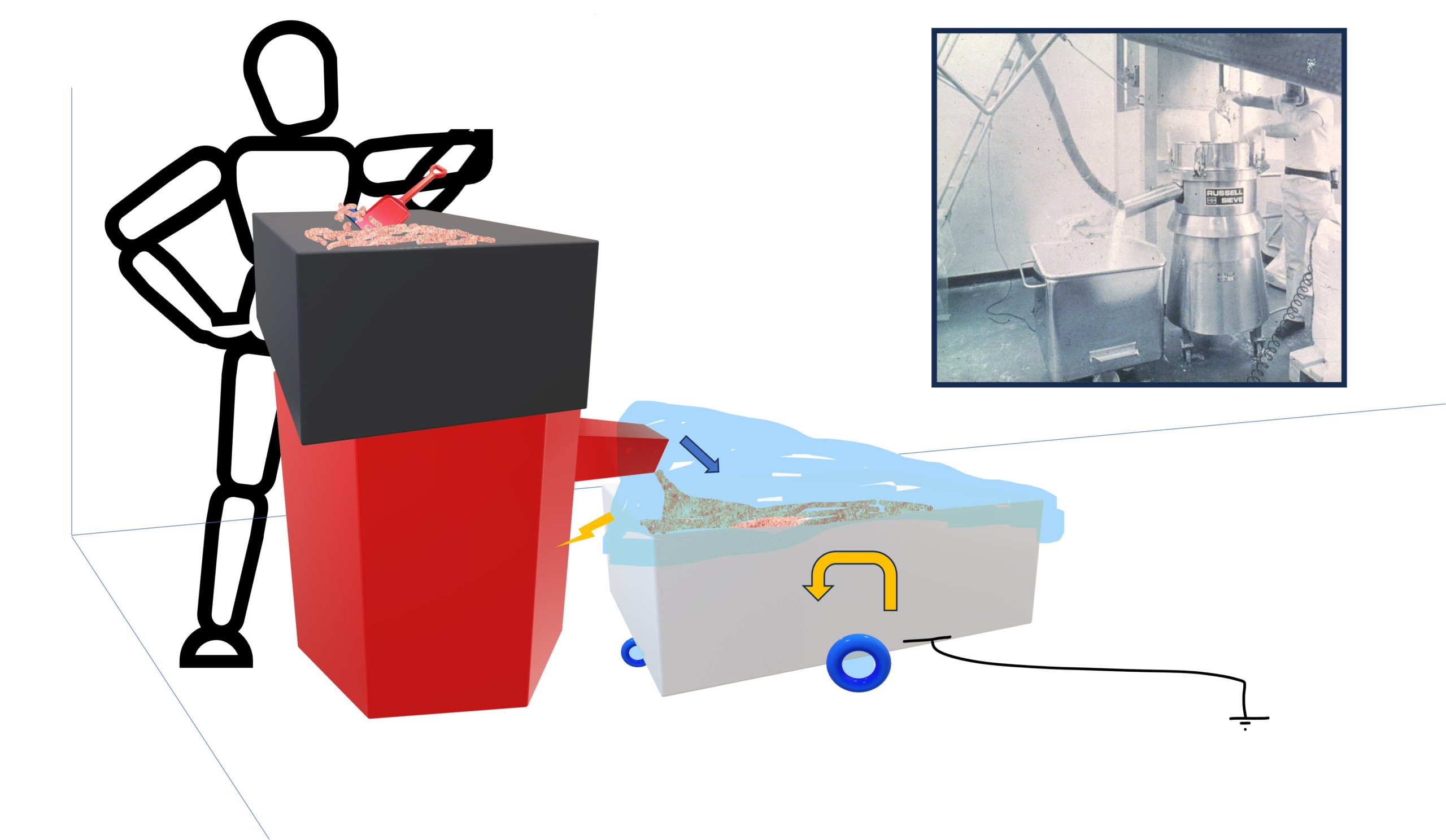
From a practical standpoint, the first line of defense is bonding and grounding all conductive (metal) components of the facility that can become electrostatically charged. In some instances, this may be sufficient – but not always.
For example, if the powder being handled is insulating (non-conductive), it can retain any static charge even when it’s handled in well-grounded metal equipment. The retention of the charge can give rise to cone or bulk brush discharges, with energies as high as approximately 20 mJ. If the Minimum Ignition Energy (MIE) of the dust cloud is less than 20mJ, a dust flash fire or explosion hazard exists.
Because of these complexities, a more detailed evaluation is often encouraged. We recommend conducting an Electrostatic Hazards Analysis (EHA), led by a subject matter expert, alongside the DHA to ensure electrostatic hazards are appropriately identified and managed.
Q: In your experience working with industry, where do organizations most often struggle when trying to manage combustible dust risks, from testing and hazard analysis to implementing safeguards?
Vahid: Based on our experience, for facilities that have already performed a DHA, the biggest challenge they face is closing the safety gaps that their Dust Hazard Analysis has identified. Again, this is often due to DHA recommendations that are vague, impractical, and not prioritized.
While standards like NFPA 660 provide a clear framework, compliance is determined by execution. Taking a proactive approach grounded in high-quality data, practical recommendations, and the right level of expert support can help facilities meet compliance requirements and meaningfully reduce risk.
Stonehouse can partner with you on your upcoming DHA, combustible dust testing needs, electrostatic hazard analysis, or implementing recommendations from a previous DHA report.

Get in touch
To learn more about our expertise and services in dust explosion prevention & mitigation, call us at +1 609 455 0001 or email us at [email protected] today.
We also offer tailored virtual and in-company process safety training programs on Dust Explosions, Static Electricity and HAC (Hazardous Area Classification) and more. Find further information here.