





Search
Static Electricity in Industry: What You Need to Know
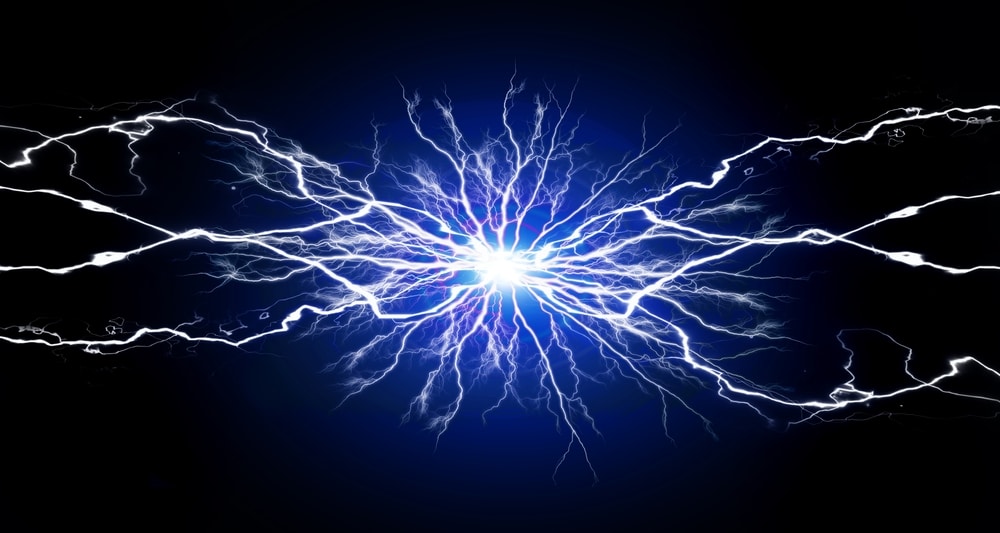
Static electricity is one of the most prevalent and underrated ignition sources in industry. It can be created every time there is contact and then separation between two surfaces. In a process environment, liquids and powders moving through pipes and hoses, plastic sheets being pulled from a reel, and even people walking across floor surfaces are only a few examples of situations that can create static.
If this charge is allowed to build up on a surface to a sufficient level, it can then dissipate in the form of a discharge (commonly referred to as a spark) that has the energy to ignite flammable gas, vapor, or combustible dust clouds. Such electrostatic discharges have long been recognized as a cause of industrial flash fires and explosions yet often escape consideration in the process hazard analysis and dust hazards analysis.
Electrostatic charging is not, in and of itself, hazardous. It starts to become a hazard when a charge accumulates on an object that is either not grounded or is insulating/non-conductive. In industrial situations, electrostatic charge may build up on:
- Electrically isolated conductive (metal) equipment
- Insulating (e.g., plastic) containers, bags, hoses, linings
- Powders and non-conductive liquids
- Personnel wearing insulating footwear or standing on insulating flooring
If an adequately charged object approaches a grounded object, the charge (stored energy) can suddenly release in the form of a discrete discharge.
Ignition can take place with a discharge occurring in a flammable atmosphere, provided the minimum ignition energy (MIE) of the flammable atmosphere is less than the effective energy of the discharge, resulting in a flash fire or explosion.
Electrostatic discharges can be a credible, if not dominant risk, since many industrial processes commonly involve flammable gases, liquids, and/or explosible dusts.
Early Warning Signs of Static Charge Build-Up
Static electricity often makes its presence known, particularly to the observant. In fact, there are usually clear signs that indicate when charge is building up and discharging.
Since continuous charge buildup is unstable, it can lead to electrical breakdown in the surrounding air. When this happens, you might notice:
- Sparks: Discharge between an electrostatically charged conductor (e.g., metal) and a grounded conductive object. The energy of a spark depends on the capacitance of the charged conductive object and how much static charge accumulates on that object. Sparks are often heard as a click or clack, and sometimes visible as a quick flash.
- Brush discharges: Discharge between charged insulator and grounded conductive electrode. Brush discharges have relatively low maximum energy (less than approximately 4mJ). While brush discharges can ignite flammable gases or vapors (and potentially hybrid mixtures) they have not been shown to ignite dust clouds, even if the dust cloud MIE is less than 4mJ. Brush discharges are typically recognized by a hissing sound or a dim glow.
- Propagating brush discharges: Discharge on the surface of a charged insulator backed by a conductor. Propagating Brush discharges can also occur inside insulating hoses and pipes during pneumatic conveying of powders or the transfer of low-conductivity liquids. The energy of these discharges can be as high as approximately 1,000mJ and can readily ignite flammable gases, vapors, and dust clouds. Propagating Brush discharges are seen as luminous sparks, like a brush of light.
- Cone or bulking brush discharges: Powder handling and transfer can give rise to the generation of static charge on the powder particles entering the receiving vessels and containers. Bulking of highly charged insulating powder in containers causes a partial surface discharge over the top of powder pile that appears as a luminous, branched channel flashing radially from the wall toward the center of the pile – known as bulking or cone discharge. Discharge energy depends on factors like powder volume resistivity, electrostatic chargeability, particle size, and vessel dimensions. Larger particles and vessels are expected to give rise to higher energy discharges (as high as 10- 25mJ). Cone discharges appear as branch channel flashing, or lightning-like bursts on the surface of the powder heap.
Electrostatic Sparks from the Human Body
Electrostatic sparks from the human body have been responsible for numerous flash fires and explosions. The human body is an electrical conductor and can accumulate static charge if isolated from ground. Insulating footwear and/or flooring would cause isolation of body from ground.
A person can become electrostatically charged by activities such as:
- Walking on an insulating surface
- Manual pouring of powders and liquids from one container to another while wearing insulating footwear or standing on insulating flooring
- Brushing against surfaces while wearing insulating footwear
- Touching or being close to an already charged object (otherwise known as induction charging)
A charged person might not feel or notice the charge until they approach a grounded conductive object. Discharges from human body could potentially ignite any flammable gas, vapor, or dust cloud atmosphere with a minimum ignition energy (MIE) less than about 30mJ.
Why Static Can Be Overlooked
Despite its significant role in industrial incidents, static electricity is frequently overlooked in hazards analysis and process safety management studies.
General hazard analysis methods such as HAZOPs, What-If studies, Fault Tree Analyses, and DHAs are essential tools, but they often lack the resolution needed to identify electrostatic hazards. This might be due to the skillset of the team.
Electrostatic hazards require specialized understanding of charging mechanisms, accumulation pathways, discharge types, and ignition sensitivity (MIE) of the flammable atmospheres. Without targeted analysis and on-site and laboratory measurements/tests, static risks may remain hidden until an incident occurs.
Managing and Preventing Electrostatic Ignition Hazards
Static electricity continues to be a contributing factor in industrial fires and explosions. Preventing electrostatically initiated incidents requires more than general awareness.
Specialist electrostatic hazard assessments can be conducted to identify where static charge may be generated, how it may accumulate, and what controls are necessary to safely dissipate it. These assessments focus on materials (liquids and powders) being processed, processing equipment, and operational activities, helping to ensure that electrostatic hazards do not become ignition sources.
Identifying and managing static electricity hazards (through consulting and electrostatic testing) is a critical step in preventing fires and explosions and protecting people and assets. Contact Stonehouse to learn how we can support your team today.

Get in touch
To learn more about our expertise and services in dust explosion prevention & mitigation, call us at +1 609 455 0001 or email us at [email protected] today.
We also offer tailored virtual and in-company process safety training programs on Dust Explosions, Static Electricity and HAC (Hazardous Area Classification) and more. Find further information here.